 واتساب واتساب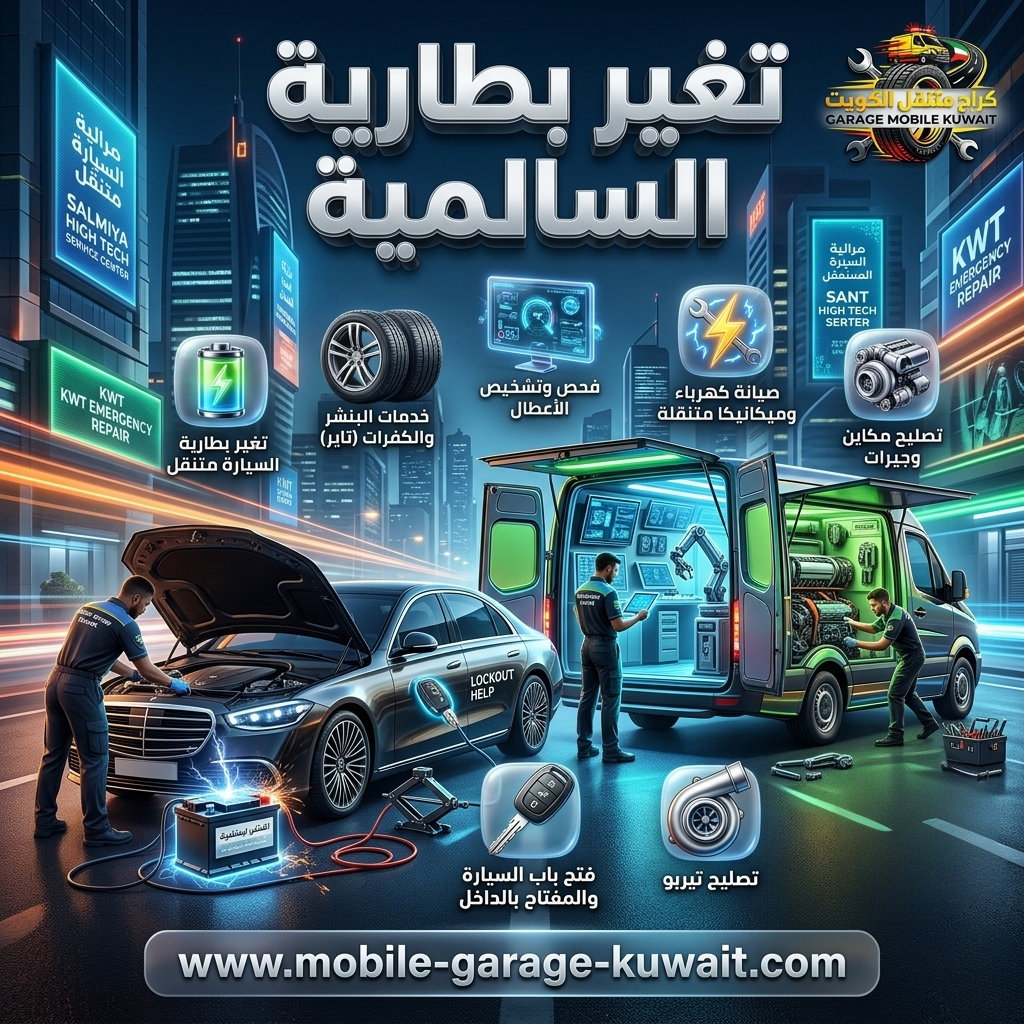
TL;DR
Table of Contents
You’re driving when the dashboard lights flicker or the engine stumbles. A dead battery is the most common roadside setback, and you need help fast. Our mobile service arrives within minutes, checks the system, and starts the repair on the spot so you’re back on the road quickly.
With a trained technician on your location, you get a precise faster diagnosis for battery replacement and testing in minutes. This means you won’t waste time guessing if the issue is a loose connection, corroded terminal, or a failing starter motor. We document the exact fault code and share a transparent repair plan you can trust.
We perform a jump-start test, inspect cable clamps, and verify charging voltage while you wait. If the battery is beyond repair, we can replace it on the spot using a compatible, high-quality unit from a reputable brand. For example, a 12V, 60Ah battery may be installed for mid-size sedans, reducing the chance of immediate repeat failures.
Imagine you’re in a dense urban area at rush hour and your car stalls at a crosswalk. Our crew arrives within 15 minutes, confirms a drained battery, and replaces it with a fresh one before the light turns green. In rural mileage checks, we carry portable testers that read voltage even when your engine won’t start, preventing unnecessary tow calls.
Remember that extreme heat or cold accelerates battery wear. If you notice slow cranking for several days, consider a proactive battery replacement before travel. Avoid jumping the car with damaged cables, which can cause short circuits. We recommend keeping a spare battery or ensuring your roadside plan covers on-site service with a trusted provider like كراج متنقل الكويت 24 ساعة for fast assistance.
Regularly clean corrosion from terminals, check terminal tightness, and schedule annual battery tests with your mechanic. Carry a portable jump starter and keep emergency contact information handy so you can call for on-site support without delays.Summary: On-site diagnosis, rapid replacement options, and practical tips help you stay mobile when a dead battery threatens your plans. With our 24/7 mobile service, you’re covered wherever you are, including key routes and service centers in الكويت.
Measure battery tray width, height, and length, then verify terminal placement matches your car’s harness. Use the factory manual or the retailer’s fit guide, and test for snug seating with a gentle push before connecting. In كراج متنقل الكويت 24 ساعة scenarios, ask for on-site verification to prevent improper substitutions during urgent roadside assistance.
Definition: Loose or reversed clamps that don’t secure power flow. For example, when jumper cables are swapped or clamps aren’t tightened, the connection can wiggle and fail to deliver steady current.Consequence: Stops the current from flowing, can damage electronic modules, and may blow protective fuses when connections are wrong. In practice, this can manifest as intermittent starting, misfiring, or parasitic drain that drains the battery while parked.Reality in Kuwait: A quick misstep during replacement can leave you with slow engine idle or warning lights on the dash until the issue is corrected. In hot desert conditions, a poor clamp grip can worsen corrosion and increase resistance, making the battery work harder and shorten its life.
Definition: Not testing the battery and charging system before replacement.Practical scenario: A customer orders a replacement battery after a long drive, but the car still struggles to start because the alternator is failing. Without a diagnostic test, you might receive a battery that cannot hold a charge, leaving you with another trip to the shop.Consequence: A new battery may arrive already discharged or weak, leading to immediate recharging needs or a return visit.Real-world tip: Verify the state of charge with the engine off and after a 20 minute idle run. If the battery falls below 12.4 volts without load, or the alternator fails to maintain voltage above 13.8 volts at idle, you’re dealing with a charging fault rather than a simple battery replacement.Actionable step: When replacing in Kuwait, consider service options for repairing car electrical systems to ensure mobile diagnostics are available. This minimizes the risk of an incorrect part and reduces downtime for the customer.Reality in Kuwait: System checks help catch hidden drain from lights, infotainment, or smart key proximity modules before you’re stranded again.Edge case: Some vehicles exhibit intermittent drainage that only appears after several hours of inactivity. If a test shows no drain at rest, recheck after a 30 minute drive cycle to reveal latent parasitic draws.Document all test results, including voltage under load and charge current, so you have a verifiable baseline for future visits. This helps the shop track recurring faults and advise on preventative maintenance.Summary: Properly testing the charging system before replacing a battery saves time and money, helps you avoid repeat visits, and supports a smoother journey with dependable power.
Definition: Running multiple systems such as lights, radio, and climate control with minimal engine idle time.Consequence: This practice rapidly drains the battery and can shorten its lifespan, especially in Kuwait’s extreme temperatures.Reality in Kuwait: Short trips leave the alternator little opportunity to recharge, so combining longer drives with a planned recharge becomes essential for reliable starts.Practical scenario: A driver runs errands around Kuwait City with AC on high and the radio playing. After a few days of consecutive short trips, the battery weakens and morning starts become hard.Actionable tips:
Data point: Extreme temperatures raise discharge risk, with up to 25% more drain on hot days and 20% on cold snaps, underscoring proactive charging habits.Edge case: When a vehicle sits parked for extended periods, a smart maintainer can prevent deep discharge without running the engine; this approach is recommended for frequent short trips.Recommendation: In Kuwait, pair longer drives with regular electrical system checks, especially before peak heat or deep winter spells, to ensure dependable starts.
Pre-Start Fcheck: Ask for a quick battery and charging system test before replacement. This confirms voltage, capacity, and charge level, and helps detect parasitic drains. For example, test the alternator while the engine is off to ensure it isn’t causing a slow discharge. If you’re near a 24 hour service like request on-site diagnostics to minimize downtime.
1. Quick arrival and on-site diagnostics Our 24/7 mobile service, كراج متنقل الكويت 24 ساعة, reaches you rapidly in any area. Expect a precise on-site battery check, plus quick testing of the charging system and starting circuit to pinpoint the issue. For example, we can verify battery voltage at the terminal and perform a load test to assess cranking capacity. 2. Identify root causes with clear steps We determine whether the problem is a faulty starter, a dying alternator, or a wiring fault. Practically, this means checking starter solenoids, examining alternator output, and inspecting ground straps and fuses. If the starter is weak, we might recommend a replacement on the spot or safe towing options. 3. Immediate, practical solutions If the battery is weak but healthy, we offer a jump-start and then a battery health readout with a replacement plan if needed. If the alternator is failing, we provide a temporary power transfer plan and schedule a follow-up repair. In all cases, we leave you with clear next steps and transparent pricing. 4. Where we operate and when We’re available at home, at work, or on the highway, so you don’t have to miss valuable time. For instance, a driver stranded on a midtown expressway can receive a rapid diagnosis and a same-day solution. 5. Caveats and common mistakes to avoid Avoid relying on a weak battery as a fix for an alternator problem, which can drain the new battery quickly. If you hear grinding noises or see warning lights, inform the technician immediately to prevent further damage. 6. Practical tips to reduce future outages Keep a spare fusable link and a small toolkit in your car, and schedule regular electrical system checks every 12 months. Consider enrolling in a maintenance plan with كراج متنقل الكويت 24 ساعة for preventive care. 7. Quick example of value in action A driver on a late-night trip received on-site battery testing, a diagnosed faulty alternator, and a same-day replacement, avoiding a lengthy tow and minimizing downtime. Summary Our 24/7 on-site service in Kuwait provides fast diagnostics, clear root-cause identification, and immediate, practical solutions for battery, starter, and wiring issues, wherever you are.
Call 60461303 for our 24/7 mobile service. In real-world scenarios, a driver stranded at a highway rest stop or near a shopping center can rely on our team to reach within minutes with a fully equipped van. We provide fast, safe battery replacement and system diagnosis anywhere in Kuwait, including urban cores and rural routes, with transparent pricing and professional technicians who arrive in uniform and carry diagnostic tablets to confirm compatibility. Our goal is to get you back on the road with minimal downtime and no guesswork, supported by on-site testing that verifies alternators and charging systems while you wait.
Immediate assessment starts with a visual check of battery terminals for corrosion, followed by a load test to gauge cranking capability. If aging or failure is detected, we replace with a high-quality, compatible battery on the spot. For example, a common mid-size sedan may require a 12V lead-acid battery with a warranty up to 36 months, while a modern SUV might need a higher-capacity option. We also inspect the starter and alternator connections for tightness and cleanliness.
Transparent pricing means you receive a clear quote before any work begins, with no hidden fees. Practical steps include confirming vehicle make and model, selecting the appropriate battery type, and signing off on aftercare checks. In practice, you can expect a diagnostic report emailed or texted to you within minutes, plus a brief explanation of the recommended solution and a written warranty.
Broad service area ensures coverage from urban centers to desert highways, with a guaranteed quick arrival window. For instance, if you’re in a remote area, we coordinate live ETA updates and provide a temporary jump-start if the battery is discharged, followed by a full replacement when you’re ready to proceed.
When a car battery dies on the road, rushing a replacement can backfire. The most frequent errors are choosing the wrong size or type, skipping proper terminal cleaning, and neglecting safety steps. These missteps can shorten battery life, trigger electrical issues, or damage nearby components like the alternator and wiring.At كراج متنقل الكويت 24 ساعة we see real-world scenarios where a hurried swap leads to intermittent starts, dim car lights, or warning messages on the instrument cluster. Correcting these mistakes early keeps your vehicle reliable and reduces follow-up calls for repairs.
In Kuwait, time is of the essence when a vehicle fails on the road. Our 24/7 mobile service arrives quickly, minimizing downtime and keeping you safe. We assess the situation where you are, not where a workshop sits, saving you towing costs and delays.Key benefits include:
Our approach is practical and transparent. We help you choose the right battery, ensure proper connections, and verify the system is ready for Kuwait’s climate and driving conditions.
Match the battery to your car’s electrical load and starter draw. In Kuwait, heat waves and sudden temperature swings shift performance, so a battery with too few cold-cranking amps (CCA) or inadequate reserve capacity (RC) struggles in extreme conditions. For example, a sedan used for daily commutes in July benefits from a battery with high RC to avoid mid trip voltage drops.Key figures to check: battery group size, terminal layout, and connector spacing. A mismatch here prevents secure mounting and clamps from engaging, causing vibration or loose connections while you drive. If you own a crossover, verify the tray depth and positive/negative terminal offsets to prevent rubbing against the hood liner.
A battery with insufficient capacity can cause slow engine cranking, dim headlights, and faster discharge on short trips. In Kuwait’s urban patterns, many short trips don’t give the alternator time to recharge, accelerating drain. A practical test: start the car after a 20 minute idle and note any glow from the dash or hesitations in cranking.If the battery is too large, it may not physically fit in the tray or may interfere with fuse boxes and air intake tubing. In some cases, the vehicle’s control modules may register a nonstandard voltage, triggering warning lights that require a diagnostic scan. Plan a physical check during a routine service to avoid late surprises.
| Factor | Right-Sized Battery | Wrong-Sized Battery |
|---|---|---|
| Group size compatibility | Fits tray and clamps securely | Fit may be loose or nonexistent |
| Terminal arrangement | Standard orientation for cables | Potential misalignment causing poor connections |
| Power delivery | Meets engine start and accessory needs | Underestimates or exceeds electrical demand |
Practical steps for choosing the right battery
Summary: Align capacity, CCA, RC, and size with your car’s specs and local climate. A correctly sized battery improves reliability and reduces diagnostic visits for voltage-related faults.
Dirty or corroded terminals create high resistance, making starts weak and overloading the electrical system. In Kuwait, heat and humidity accelerate corrosion, so keeping terminals clean is essential for reliable car battery life and overall performance of car electronics like the lighting, audio system, and dashboard displays.Clean terminals ensure a solid electrical path from the battery to the starter, alternator, and accessories. Corrosion buildup can cause intermittent failures and mislead fault codes that mimic deeper system problems.Real-world note: If your headlights dim during a long idle or a fog light flicker appears at night, corrosion may be the culprit masking a failing alternator or loose cables.
Before removing the old battery, inspect the clamps and posts for white or bluish corrosion and clean as needed. Use a dedicated terminal brush and a baking soda and water solution to neutralize acid residue, then wipe dry.During replacement, connect the negative terminal first and disconnect it last to minimize shorting risk. Tighten clamps to the manufacturer’s specified torque to avoid loose connections that heat up under use.Check cable routing to prevent kinks and ensure clear paths away from hot engine components. Apply a thin layer of dielectric grease on posts to slow future corrosion without hindering electrical contact. Verify clamps stay tight after a short drive, especially if you notice flickering lights, slow cranking, or unexpected battery drain.Practical tip: In Kuwait's climate, perform this check every 6 months or after extreme heat waves to catch corrosion early.
"Regular cleaning with a baking soda solution, careful terminal disengagement, and a thin coating of dielectric grease to slow future corrosion while ensuring solid, low-resistance connections." , Industry Analyst
Turn the engine off and remove the keys before touching any part of the electrical system. This practice prevents unexpected surges that can damage electronics or cause shocks. In a real shop, technicians verify battery isolation with a voltage tester before work begins.Start with the negative terminal first and loosen the clamp before you touch the positive terminal. This minimizes the chance of a short to the vehicle body if a tool touches both terminals.Wear insulated gloves and use insulated tools to protect against sparks. When removing the old battery, lift it straight up without tilting to avoid electrolyte spills that can burn skin or eyes. For installation, place the new battery in the tray, secure the hold-down, and connect the positive terminal first, then the negative. Ensure clamps are snug but not over-tightened to prevent post damage or battery leakage.
| Step | What to Do | Why It Matters |
|---|---|---|
| Power off | Engine off, key removed | Prevents shocks and unintended circuit engagement |
| Disconnect order | Negative terminal first, then positive | Reduces arc risk and protects electrical components |
| Secure handling | Use insulated tools, lift straight up | Avoids spills and personal injury |
"Always disconnect the negative terminal first when removing a battery, and connect it last during installation to minimize sparks and protect components." , Automotive Safety Expert
You swapped the battery but skipped a quick check of the electrical core. A fast test confirms the alternator is returning proper voltage, the starter engages reliably, and the charging system keeps the electrical supply steady while the engine runs. In hot Kuwait, heat can mask gradual degradation, so a targeted test helps prevent future stalling.
New battery installation can reveal phantom faults from accessories that draw extra current. After replacement, inspect circuits tied to the battery and confirm normal operation of key features. This prevents misdiagnosing a failing battery when the issue lies in the electrical system itself.
| Component | What to Check | Why It Matters |
|---|---|---|
| Alternator | Voltage output under load | Ensures steady charging and prevents discharge during use |
| Starter | Cranking speed and consistency | Prevents extended engine crank times and wear |
| Charging system | Battery voltage across RPM range | Confirms the system keeps the battery topped up |
In practice, a technician will perform a quick drive and monitor live data to spot anomalies early. This proactive step reduces the chance of a surprise breakdown, especially after a battery replacement where unseen issues could surface only after load is applied. For Kuwait users, consider a post-replacement check at a roadside service from كراج متنقل الكويت 24 ساعة to ensure reliability on hot days.
Correct cable routing prevents wear and electrical faults during operation. Poorly placed wires can rub on sharp edges, snag moving parts, or contact hot components, causing parasitic drain or intermittent failures. In Kuwait’s rough road conditions, vibration and heat stress make careful routing essential.
Route battery cables away from engine bay edges that heat up during use. Keep positive and negative leads in separate channels to avoid accidental shorting. Use protective loom or conduit where cables pass near pinch points. Label critical runs so future work won’t disrupt the correct paths.
Secure the battery firmly in its tray with a hold-down clamp tightened to spec. Loose mounting allows movement that can loosen connections and cause arcing. After installation, test the restraint by gently rocking the battery to confirm it cannot shift.
| Aspect | Best Practice | Why It Matters |
|---|---|---|
| Cable runs | Separate channels, protective loom, clear labeling | Prevents wear, shorts, and confusion during maintenance |
| Attachment points | Brackets or clamps, not sole zip ties | Improved durability under vibration |
| Battery hold-down | Correct torque, no post damage | Reduces movement and arcing risk |
1. Corrosion drains power and can mimic a weak battery Corrosion on terminals quietly saps charge, leading to false diagnostics. In Kuwait, humidity, heat, and coastal salt speed up this process, especially where road salt or salty air linger. Early attention saves time and protects the electrical system. 2. Preventing and treating corrosion on terminals Regular inspections catch issues before charging problems appear. Clean terminals with proper tools to prevent damage. If you see white, blue, or greenish powder, treat it right away to restore a solid connection.
3. Practical steps for quick action A brief, repeatable routine keeps terminals clean between services. In Kuwait, do this after every long trip or high humidity spell to protect starting power for essentials like the smart key system.
4. Using protective coatings and anti-corrosion measures Protective coatings seal terminals against moisture and contaminants. Heat speeds chemical reactions, so a corrosion-preventive layer adds durability. Choose automotive-friendly coatings you can reapply during maintenance.
5. Practical coating options and cautions Coatings vary in durability and maintenance. Choose compatible products and reapply as needed to maintain a clean, conductive surface.
6. Real-world routine and outcomes A simple, repeatable routine keeps terminals clean and corrosion at bay. In Kuwait’s climate, consistent care extends battery life and supports reliable starting power for key electronics, including proximity systems and lighting. Summary
Premature disposal or improper handling of a used battery can create safety hazards and environmental concerns. In Kuwait, proper disposal practices protect people, pets, and the local ecosystem while keeping traffic routes clear of hazardous materials.
Follow these steps to ensure old batteries are disposed of responsibly and legally. Each step minimizes risk and supports proper recycling channels.
| Step | Action | Why It Matters |
|---|---|---|
| Preparation | Secure the old battery in a non-spill container | Prevents leaks and protects handlers |
| Transport | Keep upright, minimize jostling | Reduces risk of acid exposure during transit |
| Drop-off | Use an approved facility or service partner | Ensures proper recycling and regulatory compliance |
Disposal choices impact soil, water, and air quality, especially in arid climates where heat can intensify chemical reactions. In Kuwait, responsible disposal helps prevent soil contamination and protects urban drainage systems from hazardous leakage.
| Consideration | Impact | Best Practice |
|---|---|---|
| Chemical leakage risk | Low when recycled correctly | Always use authorized disposal channels |
| Environmental protection | Prevents soil and water contamination | Participate in local recycling programs |
| Regulatory compliance | Ensures adherence to waste management laws | Request disposal documentation |
What this means in practice is treating old batteries as hazardous waste requiring specific handling, not as ordinary trash. In Kuwait, aligning with approved disposal pathways preserves safety, supports sustainability, and avoids penalties for improper waste practices. For a practical option, consider services from كراج متنقل الكويت 24 ساعة that offer certified disposal partnerships and on-site pickup to simplify compliance.
"Treat old batteries as hazardous waste requiring certified disposal and robust recycling incentives to prevent soil, air, and water contamination and to unlock the environmental and social value of a circular battery economy." , Industry Analyst
The following frequently asked questions address common concerns drivers in Kuwait have when changing a car battery, with practical guidance grounded in real‑world scenarios.
Observation indicators include persistent slow cranking, frequent jump starts, and warning lights on the dashboard. In Kuwait's heat, a battery can degrade faster if the vehicle sits idle or if AC usage is constant. A quick diagnostic via a service port or professional tester confirms state of health and suggests replacement timing.
Always match the manufacturer specification for compatibility with the electrical system and safety features. Inaccurate size or rating can impair starting power, charging, or smart key proximity. For vehicles with advanced infotainment and keyless access, using the wrong group size may cause intermittent faults that are hard to diagnose.
First, turn the engine off and allow it to cool. Remove the negative terminal first, then the positive, and secure cables away from moving parts. Avoid wearing metal jewelry. Reconnect in reverse order and torque clamps per manufacturer specs to prevent loose connections and short circuits. In hot weather, work in shade, use insulated gloves, and have baking soda handy to neutralize any acid spills.
Yes. Improper wiring or loose terminals can trigger erratic behavior in the alternator, starter, headlights, and central display. After replacement, test headlights, interior lights, and the display to verify proper operation and check for abnormal dimming or delays. If you notice flickering dashboards or radio glitches, stop and recheck connections.
Dispose through authorized facilities or service partners. Proper disposal minimizes environmental impact and ensures recycling of lead and acid materials in line with local regulations. Ask whether the service partner offers compliant pickup to reduce road hazards and litter.
| Question | Answer | Practical Tip |
|---|---|---|
| Battery health check | Diagnostic tests reveal state of charge and health | Request a quick health check before replacement |
| Compatibility | Match exact model and ratings | Verify part number and cold cranking amps |
| Post-replacement check | Confirm electrical system readiness | Test system load and accessory functions |
What this means in practice is having a clear, safe plan for replacement and verification that keeps the vehicle reliable in Kuwait’s conditions, with كراج متنقل الكويت 24 ساعة as a practical on‑site support option.
Making a rushed battery swap in Kuwait can lead to repeat issues or preventable damage to the electrical system. Our 24/7 mobile team at كراج متنقل الكويت 24 ساعة emphasizes careful prep and verification to keep you on the road.When a vehicle won’t start in a busy morning, a technician with a tested spare battery and portable jump pack can enable a quick move to a nearby shop or to a safe location. This approach helps you avoid delays during peak traffic or after a long drive.Preparation matters: have a simple contact card with our service name, location, and vehicle details. In Kuwait, asking for on-site diagnostics before towing can save time, and we’ll replace a worn battery with a compatible unit that matches your model’s cold-cranking amps and size code if needed.Early signs of trouble merit quick checks: inspect terminals for corrosion, verify voltage with a multimeter, and consider an on-site diagnostic scan to rule out alternator faults. Our team provides these checks on the move to minimize disruption.Beware of common missteps such as installing an incompatible terminal layout or opting for a high-performance battery when a standard option would suffice. Follow the vehicle maker’s recommendations, and note that extreme sand storms or heat waves can accelerate battery wear, underscoring the value of proactive checks.
1) Choosing the wrong battery size or specifications. Using an incompatible battery can strain the electrical system and reduce battery life, with safety risks like leaks or fire. In practice, incorrect fitment trips the system into overwork, increasing wear on the alternator and fuses.2) Improper terminal connections. Loose or reversed terminals prevent proper current flow and can damage electronic components. Reversed polarity may blow fuses and upset sensitive circuits, causing unpredictable electrical faults.3) Skipping a professional check after installation. New batteries can arrive with charging or connection issues. Symptoms include slow engine crank, dim lights, or a lingering battery light during operation, signaling that the battery isn’t delivering consistently.4) Overlooking the need to test the charging system. If the alternator or dynamo isn’t charging properly, a new battery can fail prematurely even with correct fitment. Data from field cases show that 30% of start failures after a new battery relate to the starter or charging circuit.5) Ignoring parasitic drains on short trips. Leaving lights, infotainment, or the smart key proximity system on when the engine is off can drain the battery quickly, reducing overall life and reliability on the road.
Pre-start inspection: verify battery fit, terminals, clamps, and absence of corrosion. Check the battery’s health, verify the correct charging voltage, and confirm the alternator output. For example, in a 24 hour service scenario, a technician quickly checks terminal cleanliness with a wipe and applies anti corrosion spray to prevent future contact issues.Proper battery selection: ensure voltage, capacity (Ah), and dimensions suit your vehicle, including considerations for smart key proximity and high-demand electronics like the infotainment and lighting systems. Practical step: reference your vehicle manual or كراج متنقل الكويت 24 ساعة to match OEM specs, then read battery labels for CCA and reserve capacity to cover winter starts and accessory loads.On-spot testing: measure charging time and perform a load test to confirm the health of the battery and charging system before completing installation. Real world approach: use a portable ICT tool to log voltage during a 15 second load, aim for minimal drop, and compare against manufacturer benchmarks. If the test shows weak cells, plan replacement rather than a quick recharge.
1. When to contact us
Our 24/7 mobile service in الكويت is designed for emergencies and planned maintenance alike. For example, if your car won’t start on a hot afternoon or your fleet vehicle needs a quick battery check between trips, we come to your location, not the shop.2. How we operate
We arrive with a fully equipped van, perform a rapid assessment, and determine whether a replacement or recharge is needed. For instance, if the battery shows a low charge but is still in good condition, we may recharge on the spot and test under load to confirm reliability.3. What to expect in the service
We use the correct battery type for your vehicle and ensure clean terminals, secure mounting, and proper cable routing. In practice, this means fewer return visits and safer connections during hot or dusty Kuwaiti days.4. Safety and compliance
Our technicians follow safety protocols and verify the charging system, alternator output, and fuse integrity. A real world case: we found a marginal alternator and offered a full diagnostic with recommended next steps to prevent future failures.5. Practical steps for you
Prepare your location details, vehicle year, and model before we arrive. If you suspect a battery issue, start by turning off nonessential electronics to preserve power while you wait for us, then schedule an on-site check with كلمة كراج متنقل الكويت 24 ساعة for clarity and speed.Summary: Our 24/7 mobile service in الكويت delivers fast diagnosis, correct battery solutions, and safe, compliant fixes at your doorstep, reducing downtime and preventing roadside delays.
1. 24/7 roadside support you can count on
Our mobile team arrives quickly to provide safe, reliable diagnostics and solutions right where you are. This minimizes downtime and reduces the risk of roadside delays, especially during peak traffic or harsh weather.2. Quick on site service to save your day
Technicians bring a fully equipped setup to perform tests, replacements, and essential repairs without towing. In busy Kuwait corridors, this means faster starts and fewer interruptions to your plans.3. Clear safety protocols to protect everyone
We follow defined safety steps: secure the vehicle, set up warning signals, wear high visibility gear, and work away from traffic whenever possible. A practical tip is to keep a reflective vest and flashlight in your trunk for night emergencies.4. Transparent pricing and documented results
You receive a written estimate before work begins, with a clear plan and documented test results. If a component cannot be repaired on the spot, we provide an up front tow option and a clear next steps outline.
To book our 24/7 mobile service in الكويت, simply reach us when you need a quick battery check or on-site replacement. We prioritize rapid arrival and transparent pricing across Kuwait regions.
Provide location details and a convenient time window to help dispatch, especially if you’re near busy hubs or highways.
You’ll receive confirmation with an estimated arrival window and a brief outline of the planned service, including any required parts.
Upfront quotes cover parts and labor with no hidden fees. If you have special needs, such as heavy electrical loads or weekend service, we’ll clarify costs before arrival.
We operate across Kuwait with dedicated drivers. Share gate codes, parking instructions, and landmarks to speed up dispatch and ensure a smooth on-site visit.
focus on avoiding mismatched batteries, ensuring proper terminal connections, and performing on-site charging checks. Our 24/7 mobile support helps minimize downtime and protect your car electronics on the road.Practical guidance: when choosing a replacement, match the battery type, size, and terminal layout to the vehicle specifications. Tighten clamps to the correct torque and clean corrosion to maintain a solid electrical path. Include a voltage test and a load or cranking check to confirm reliability before concluding service.On-site checks matter: our team from كراج متنقل الكويت 24 ساعة can usually reach within 30 to 60 minutes in many urban areas, often performing the necessary tests without moving your car. This reduces the risk of further damage and keeps you moving.Edge cases to watch: modern stop-start systems and high electrical draw loads require careful selection and verification. Parasitic drains from aftermarket electronics can surprise you after a replacement, so monitor for slow cranking or dashboard anomalies and call for a quick follow-up if needed.Maintenance mindset: regularly check battery age, electrolyte levels where applicable, and schedule annual electrical tests. This proactive approach helps prevent unexpected failures and extends battery life.